
Kitchen refurbishment vs full replacement — which do you need?
Refurbish your kitchen if the cabinet carcasses are sound (no swelling, no rot, doors can be re-hung) and the existing layout still works for how you cook. Replace fully if the carcasses are MDF and have absorbed moisture, the layout doesn't suit you, or appliance positions need to move. Refurbishment typically saves 40–60% versus full replacement — but only on kitchens with structurally sound underlying cabinets.
The short answer
Choose refurbishment when carcasses are intact and the layout works; choose replacement when carcasses are degraded or you want a layout change.
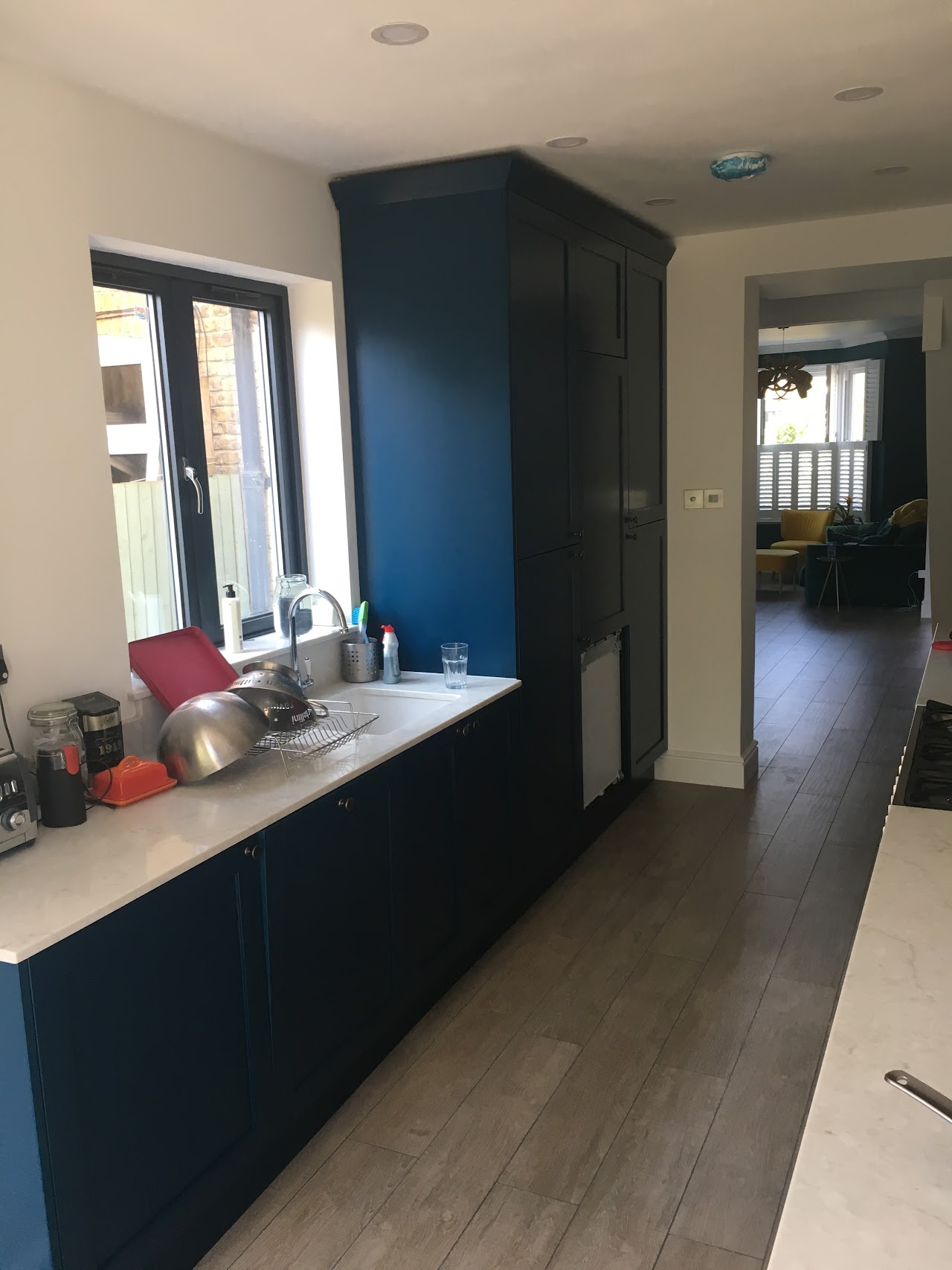
What a kitchen refurbishment actually changes
A refurbishment replaces the visible and worn elements of an existing kitchen while keeping the structural carcass and the existing layout. The standard refurb scope: new doors and drawer fronts (replacing old painted MDF, oak shaker, or dated melamine fronts with a contemporary handleless or shaker style), new worktop (almost always upgrading from a worn laminate to engineered quartz or natural stone), new handles or going handleless, new splashback (typically large-format porcelain or upstand to match worktop), often new sink and tap, occasionally new hob and oven if existing are tired or non-matching.
What stays: the cabinet carcasses (the boxes the doors hang on), the cabinet layout (so all plumbing and electrical positions are unchanged), the floor (typically), and the wall tiling above the worktop unless replaced as part of the splashback.
Cost-saving comes from three places: no demolition (existing carcasses stay), no plumbing or electrical first-fix (existing positions are reused), and no significant make-good plastering or tiling.
For the full delivery scope, see our kitchen fitting and refurbishment service.
When refurbishment IS the right answer
Refurbishment makes sense when three conditions are all met:
Cabinet carcasses are sound
Open the cabinets, look for swelling at the base (a sign water has tracked in from sink or dishwasher leaks), check the back panels for soft spots, and see whether the hinge mounts hold a screw firmly. If the carcass is solid plywood (older premium kitchens) or sound MDF (most kitchens under 15 years old without water damage), it can carry new doors fine. If carcasses are swollen, soft, or screws spin in the hinge mounts, refurbishment will fail within a year — replace fully.
The existing layout works
Walk through how you actually cook. Is the sink on the wrong wall? Is the fridge stranded across the room from the prep area? Do you fight for worktop space? If the layout is fundamentally wrong, refurbishment locks you into the same problem with a prettier finish — the savings disappear within 3 years when you re-do the kitchen properly. If the layout is genuinely fine, refurbishment delivers a near-new kitchen for half the cost.
You're not changing appliance specifications dramatically
A refurbishment can swap appliances of the same size and broadly the same type (replacing a single oven with a single oven, adding an integrated dishwasher where there's already a cabinet for one). It can't easily accommodate a switch from a freestanding cooker to a built-in oven plus separate hob, or adding an island to a galley layout — both of those need full replacement and new layout.
When full replacement IS the right answer
Full replacement is the right call when: carcasses show water damage or structural failure (swelling, rot, soft spots, hinge-mount failure); you want to change the layout meaningfully (new island, sink moved, fridge relocated, wall removed for a kitchen-diner); your existing kitchen is more than 25 years old and was budget-spec when new (the carcass quality typically isn't worth keeping); or you're refurbishing as part of a wider project (rear extension, knock-through to dining room) where the kitchen is being installed into a new layout regardless.
Full replacement also makes sense if the door styles you want simply aren't available at the carcass spacing of your existing kitchen — bespoke handleless designs in particular have specific cabinet dimensions that rarely match the carcass spacing of trade kitchens fitted 10–15 years ago.
How it compares
Direct cost comparison for typical East London kitchens (2026):
| Project type | Typical cost (2026) | Time on site | Best for |
|---|---|---|---|
| Refurbishment — doors, worktop, handles | 5 – 8 working days | Sound carcasses, layout works | |
| Refurbishment + new appliances + splashback | 8 – 12 working days | Tired finishes, no layout change | |
| Full replacement — trade kitchen (Howdens, Wren, etc.) | 10 – 15 working days | Old carcasses, layout still works | |
| Full replacement — premium UK bespoke | 10 – 20 working days | Premium aesthetic, layout change OK | |
| Full replacement — imported German / Italian | 10 – 20 working days | Premium aesthetic, design-led | |
| Full replacement + layout change + structural opening | 4 – 6 weeks | Knock-through, kitchen-diner |
Refurbishment delivers 40–60% savings on cost AND 30–50% savings on time — but only when the carcasses justify keeping. A failed refurbishment (where the carcasses give up within 1–2 years) costs more than a full replacement would have to begin with.
Quick checks to decide before you commit
Three on-the-spot checks help decide which route is right. First, open every cabinet door and inspect the carcass interior under torchlight — look for swelling at the base (water damage, refurb will fail), discoloration on shelves (also water damage), and soft spots on the side panels. Press a finger firmly into corners and seams. If you find any soft or swollen panel, replace fully.
Second, check the hinge fixings. Open and close each door. Sound hinges close cleanly with no sag and the screws hold firm. If hinges are sagging, screws are spinning, or doors don't align in their frame, the carcass screw threads are likely worn out — refurb is risky because new hinges won't hold any better than the old ones.
Third, photograph your kitchen layout from three angles and live with the photos for a week. Genuinely think about whether the layout would still annoy you with new doors and worktop. If the answer is yes, refurbishment is a false economy — full replacement with a layout you actually want is cheaper over a 10-year horizon. If the answer is no, refurbishment is a strong choice.
If you'd rather skip the research and just talk through your project, see see how we approach kitchen refurbishment.
About the author
Raphael Sappa
Founder & Lead Contractor, RJS Innovative Building Ltd
9+ years on East London building & fit-out projects
Every quote starts with an honest carcass inspection — we'll tell you straight at the site visit which route makes sense for your specific kitchen, even if it's the cheaper option.
Related questions
Not sure if you should refurbish or replace your kitchen?
Free site visit, honest carcass inspection, both quotes if it's a borderline call — you choose.
Which? Trusted Trader · Companies House #10012712