
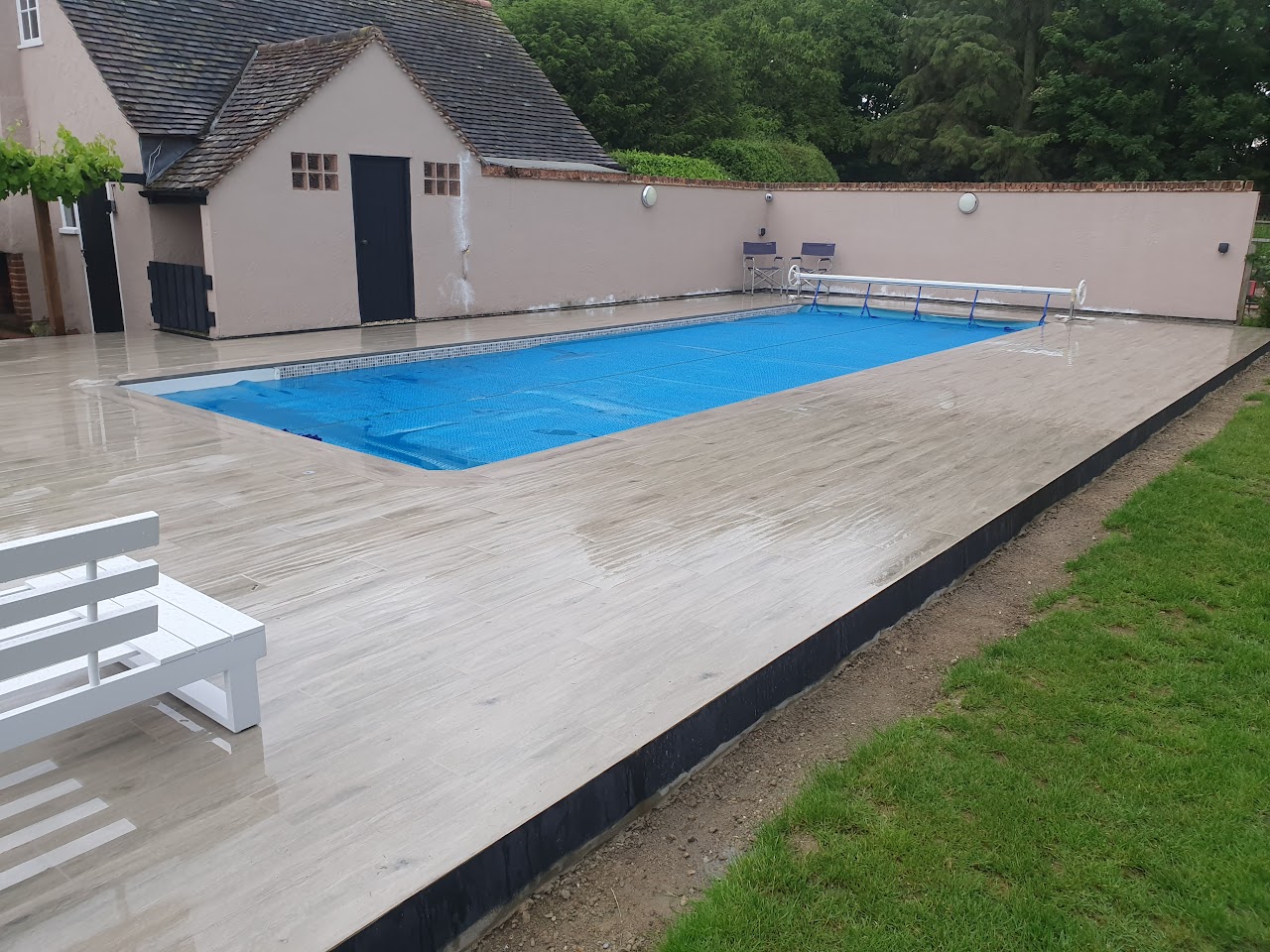
Buckhurst Hill, IG9
9m × 4m concrete-shell garden pool with frost-proof porcelain tiling, ASA limestone coping, variable-speed plant and RGBW LED lighting — handed over inside 18 weeks on site.
Reinforced concrete-shell pools designed for a 50-year structural life — dug, built, tiled and commissioned by one team in 14–20 weeks on site, with a written 10-year structural guarantee.
Free feasibility visit · Building Control & SUDS handled · 10-year structural guarantee
A residential swimming pool is the most demanding single structure most homeowners will ever commission. The shell retains 40–80 tonnes of water under hydrostatic load, the plant room runs a continuously-circulating closed loop with chemical dosing and heat exchange, and the surround has to drain rainfall plus splash-out to current SUDS standards. None of that is forgiving. A liner that fails after 10 years means draining the pool, removing the coping and re-tiling. A plant room sized to last summer's brochure spec rather than the actual pool volume means cloudy water by year three.
We build reinforced concrete-shell pools — sprayed-concrete (gunite) or twin-skin block-and-render, depending on ground conditions and shape complexity. Concrete shells are the only construction method we'll quote because they're the only one with a credible 50-year structural design life and the only one that takes a full porcelain or glass-mosaic tile finish without compromise. Fibreglass shells install quickly but blister osmotically after 8–12 years.
Most clients are owner-occupiers in Buckhurst Hill, Loughton, Chigwell, Wanstead and Hackney with garden depth supporting an 8m–12m pool, plus high-spec South Woodford and Stratford homes commissioning a pool alongside a rear extension or basement. The full project — feasibility, drawings, planning, SUDS, Building Control, dig, shell, tanking, plant, tiling, coping, lighting, commissioning, landscape handover — runs through one contract and one project manager.
Part of our swimming pools work across East London.
Pool failures share predictable root causes — almost always traceable to a corner cut at the structural or mechanical stage:
A failed pool shell or waterproofing means draining 40–80m³ of water, lifting coping and tiles, and re-shooting or re-tanking the affected area.
Six stages, each with a deliverable signed off before the next begins.
Free. Garden access, ground type indication, planning route, indicative drainage strategy, indicative budget band.
Pool drawings, plant room schematic, ground investigation if needed, planning or PD application, SUDS calculation, Building Control notice.
Itemised against approved drawings — shell, plant, tiling, coping, lighting, landscape, commissioning. Stage payments confirmed.
Dig, formwork, rebar, sprayed-concrete or block shell, cure period, fully tanked waterproofing system. 5–7 weeks on site.
Plant room build, mechanical first-fix, electrical, pool tiling, coping, underwater LED, landscape integration with surround.
Fill, water-balance the chemistry, calibrate plant, owner walk-through on dosing and aftercare, written 10-year structural guarantee, aftercare contract optional.
50+ year structural design life on the shell. No fibreglass blistering at year 8.
Filter rated for actual pool volume — turnover under 6 hours. Variable-speed pump for 60–70% energy reduction vs. fixed-speed. Solvent-weld pipework, not push-fit.
Drainage strategy and Building Control sign-off included.
One project manager from feasibility to commissioning. Tile installer, plant engineer and landscape team on the same programme — not three companies blaming each other.
Sprayed-concrete (gunite) shells are pneumatically applied at high velocity onto a rebar cage, producing a monolithic structure with no cold joints. The standard for premium UK pool builds: takes any shape (curved walls, beach entries, infinity edges), bonds aggressively to the reinforcement, and cures to 30–40 N/mm² strength. Twin-skin block-and-render shells are used where access doesn't allow spray equipment — two leaves of dense concrete blocks with a reinforced cavity, rendered internally. Both methods produce a 50+ year shell when detailed correctly. Both fail prematurely if rebar cover is wrong or curing is rushed.
Waterproofing is the layer almost no client sees and almost every shell ultimately depends on. We use cementitious tanking systems (typically two-coat flexible polymer-modified, BBA-certified) applied to a clean, primed substrate, with reinforced detailing at all corners, pipe penetrations and skimmer boxes. The tanking is then protected by the tile bed — the tile finish is decorative, not waterproof. Liner pools rely on the liner itself for waterproofing, which is exactly why the structure has to be re-lined every decade.
Tile and coping selection determines how the pool looks at year 5 and year 25. Frost-proof porcelain (typically 9–11mm thick, with R11/R12 slip rating on steps and beach entries) is the workhorse. Glass mosaic (20mm × 20mm or 25mm × 25mm) is the premium aesthetic — book-matched veining on a Calacatta-effect mosaic looks unmistakably high-end. Coping is typically reconstructed limestone or natural sandstone, with a bullnose or square edge profile — selected for slip resistance, frost tolerance, and how it weathers over the seasons.
Plant rooms are sized first by pool volume, then by usage pattern. The standard target is one full water turnover every 4–6 hours through the filter — so a 60m³ pool needs a pump moving 10m³–15m³ per hour at the system's actual head loss. Variable-speed pumps (Speck Badu Eco, Pentair IntelliFlo) cut electricity use by 60–70% versus old fixed-speed pumps and run quieter. Heat sources split into heat pumps (best for outdoor April–October pools, COP 4–5 in shoulder months) and gas boilers (necessary for year-round indoor pools where ambient air doesn't drive heat-pump efficiency).
Underwater lighting and electrical safety. Underwater LEDs are 12V SELV (Separated Extra-Low Voltage), housed in IP68 fittings recessed flush to the tile finish. Modern colour-changing LEDs (RGBW) are controlled by a wall plate or app and run at 25W–40W per fitting. Electrical bonding around the pool surround and equipotential bonding through the structure are mandatory under BS 7671 Section 702 — done at first-fix, signed off at commissioning by a qualified electrician.
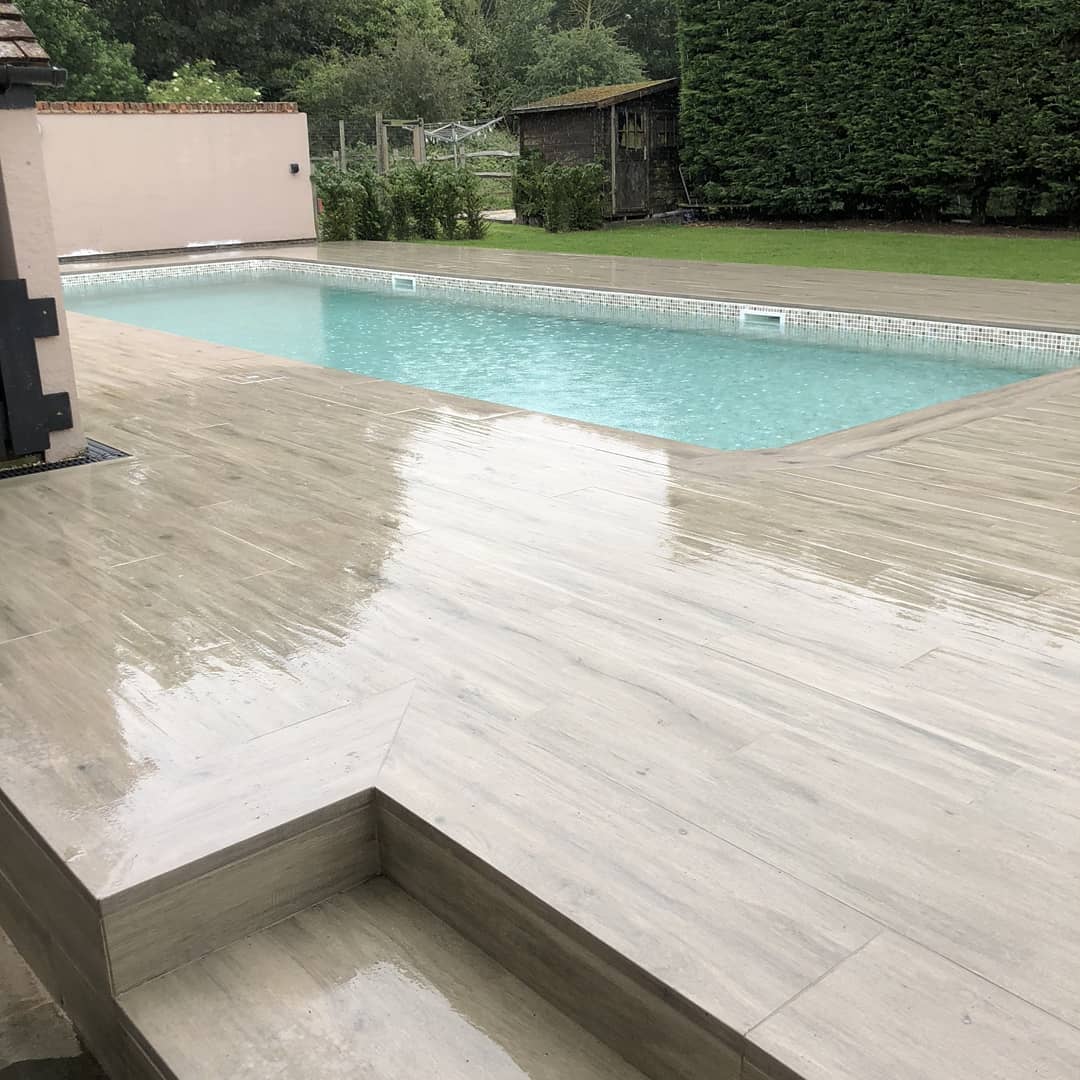
Pool projects across East London and the Essex commuter belt — strongest in Buckhurst Hill, Loughton and Chigwell where garden depth supports a 10m+ lap pool, plus premium South Woodford, Wanstead, Hackney and Stratford homes commissioning a pool alongside a wider rear extension or basement project.
Don't see your postcode? See every area we cover or ask us directly.
Founder & Lead Contractor, RJS Innovative Building Ltd
9+ years on East London building & fit-out projects · Companies House #10012712
Raphael leads pool projects from feasibility visit through commissioning, coordinating the structural shell team, plant engineer and landscape integration personally. Pool work runs to a separate programme from the main building team because the structural and mechanical risk demands focused supervision — and a single point of accountability for the 10-year guarantee.
Real East London projects — photographed on completion. Captions describe the actual work delivered.
9m × 4m concrete-shell garden pool with frost-proof porcelain tiling, ASA limestone coping, variable-speed plant and RGBW LED lighting — handed over inside 18 weeks on site.
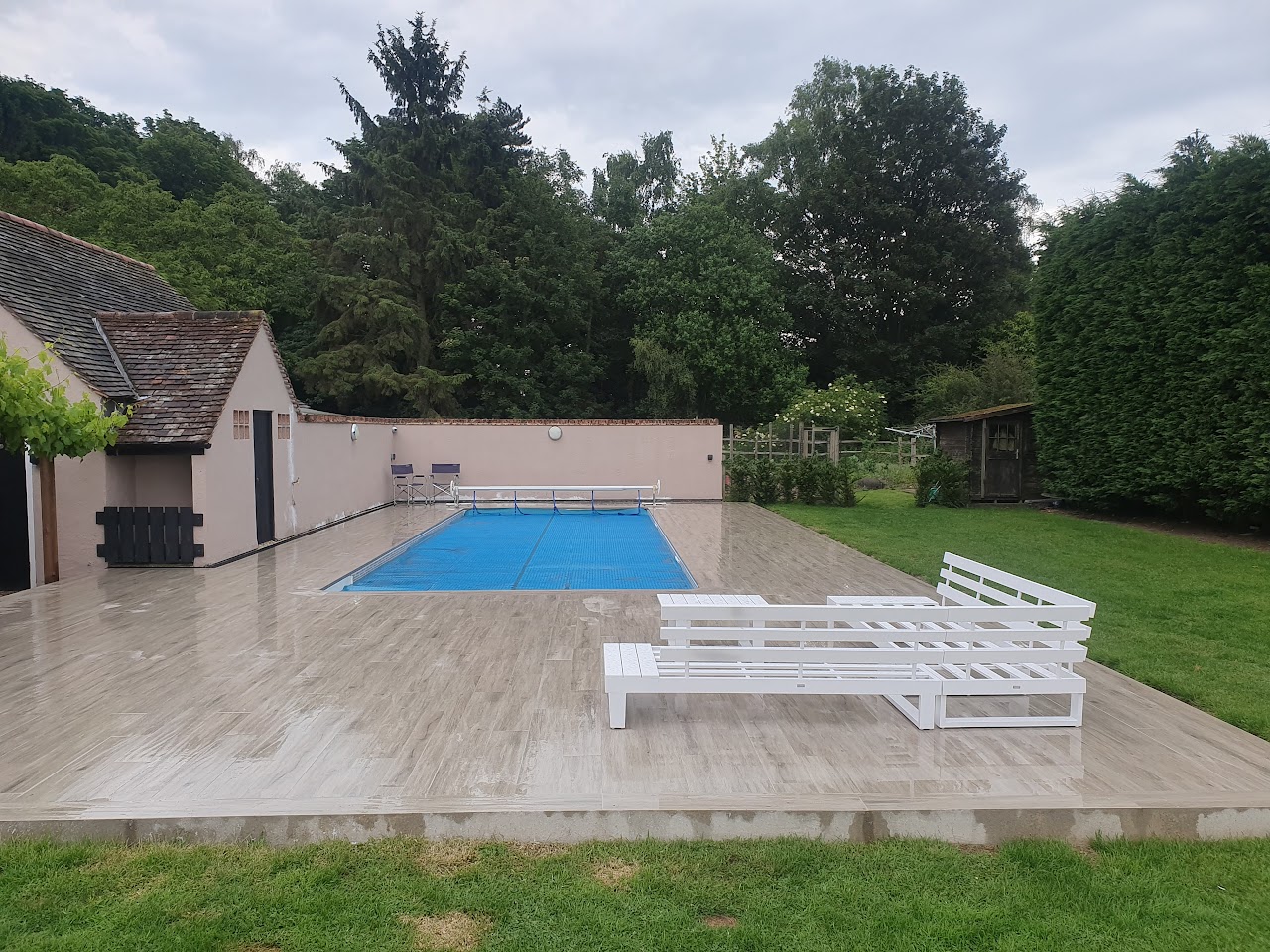
12m × 4m lap pool with infinity edge and dedicated plant room — concrete shell, glass-mosaic waterline detail, gas-boiler integration for year-round use.
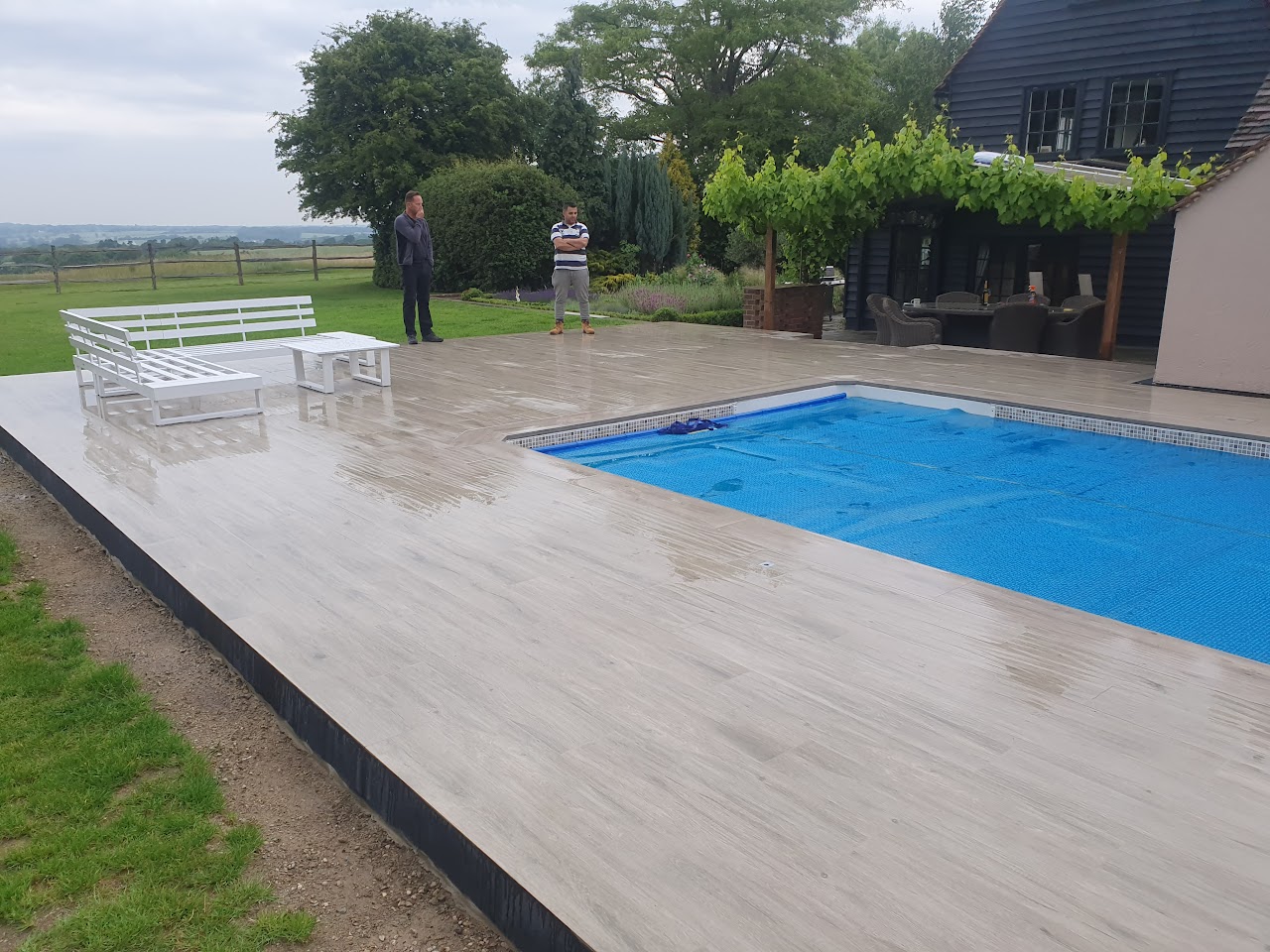
Re-tiled and re-plumbed an existing 8m × 4m pool with failed liner — converted to fully-tiled finish on the existing concrete shell, new plant room sized to current volume.
Free feasibility visit. Indicative budget. Fixed written quote against approved drawings.
Free feasibility visit · Building Control & SUDS handled · 10-year structural guarantee
Find us
RJS Innovative Building Ltd
47 Pulteney Road, South Woodford, London E18 1PR
Co. #10012712 · Founded 2016
Page details
Last updated: April 2026
Author: Raphael Sappa