
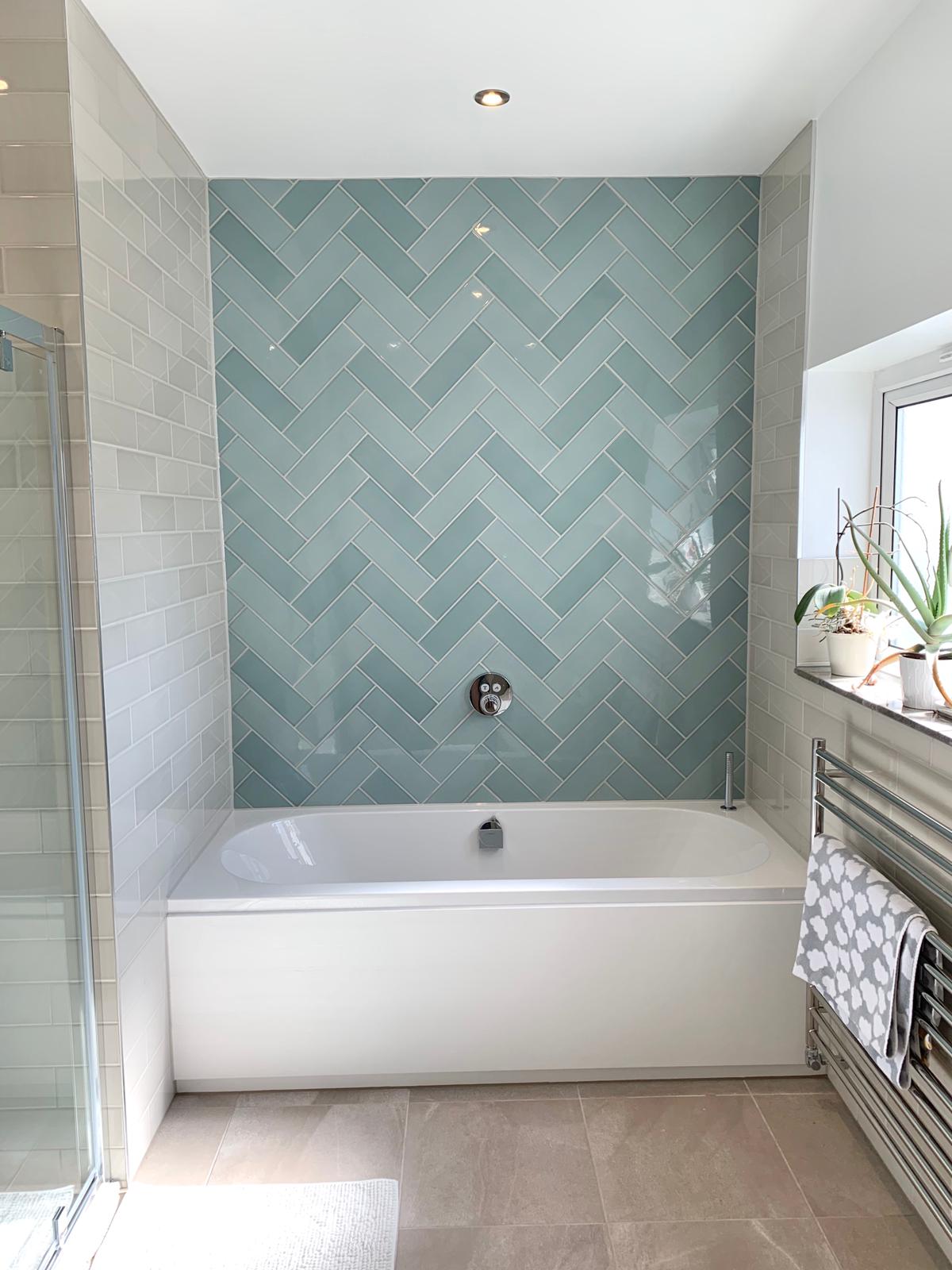
South Woodford, E18
Bathroom re-tiled with 1200×600 porcelain marble-effect after previous install failed within 18 months; full strip and decoupling membrane fitted, completed in 6 days.
Tiles that look like they were laid by people who actually know what's behind them — large-format porcelain, mosaic, marble and natural stone, with the substrate prepared as carefully as the surface.
Substrate-first installs · Decoupling membrane standard · BS 5385 compliant
Tiling is the trade where corners are easiest to cut and hardest to detect — until 12 months later when tiles start to crack, lift or sound hollow when you tap them. The visible surface looks fine; the substrate, adhesive coverage, decoupling and joint detail are what determine whether the tile is still flat in 15 years.
We tile bathrooms, kitchens, hallways, downstairs WCs and utility rooms across East London. Specialism is large-format porcelain (anything from 600×600 up to 1200×600 and beyond), but we also fit mosaic, marble, travertine, natural slate and ceramic. Wall and floor — including underfloor heating overlays, decoupling membranes for problem substrates, and full wet room tile installs with falls to drainage.
Most tiling work runs as part of a bathroom or kitchen project (where we're already on site as the main contractor). We also take on tiling-only contracts — typically when a homeowner has had the rest of the bathroom or kitchen done by someone else and wants the tiling stripped out and re-done by a specialist team. Standalone tiling jobs run 3–10 days depending on scope.
Part of our interior fit-out & refurbishment work across East London.
Tiling failures are almost always traceable to one of these — and they're all preventable at install:
Covered tiling work — where the failure is under floor or behind a bath — typically costs 2–3× the original install to remediate.
Five stages — same discipline whether the job is a 5m² splashback or a 25m² wet room.
We check the existing substrate (plasterboard, marine ply, screed, timber) and identify whether it's tile-ready or needs preparation, decoupling or replacement.
Adhesive class chosen for tile type and substrate (C1, C2S1, C2S2). Decoupling membrane specified where needed. Grout colour and width agreed.
Levelling compound or self-levelling screed if needed; primer applied to plaster or screed; decoupling membrane bonded over problem substrates.
Tiles laid with notched trowel and back-buttered for >95% adhesive coverage; tile levelling clips on large format; grout joints set to spec; movement joints at room perimeters.
Grouted, cleaned, polished. Silicone applied at all material transitions (tile to bath, tile to wall corners, tile to door threshold) using sanitary-grade with anti-mould additive.
Notched trowel + back-buttering on every porcelain tile over 600mm. Hollow-sound test on a sample of tiles after install — none go past us with voids behind them.
Schluter-Ditra or equivalent decoupling membrane on timber floors, recently screeded floors and underfloor heating zones — absorbs substrate movement so the tile doesn't crack.
Compressible joint at every room perimeter and at bath/shower tray edges — accommodates expansion without cracking grout or tile.
Mapei Mapesil AC or equivalent, applied to dry primed substrates.
Tile adhesive is graded under BS EN 12004 against tile type and substrate. The classes you'll see on the bag: C1 (cementitious, basic — suitable for ceramic on stable substrates), C2 (cementitious, improved — for porcelain on stable substrates), and the suffixes S1 (deformable) and S2 (highly deformable) for substrates that move. Large-format porcelain (>600mm) needs minimum C2S1 on most substrates and C2S2 on substrates that flex (timber floors, underfloor heating).
Decoupling membranes (Schluter-Ditra, Bauder, Tilebacker) are thin polyethylene sheets bonded between the substrate and the tile adhesive. Their job: absorb micro-movement in the substrate so it doesn't transmit to the tile and crack it. Mandatory for: tiling over timber floors, tiling over screed less than 6 weeks old, tiling over underfloor heating, and tiling over substrates with known movement (chipboard, OSB).
BS 5385 is the British Standard for wall and floor tiling — Parts 1–5 cover internal wall, internal floor, external, mosaic and natural stone respectively. Compliance covers substrate stability, adhesive choice, joint design, expansion provision and waterproofing. Most tiling failures we're called in to remediate are non-compliant in at least two of these areas — the original installer either didn't know the standard or chose to ignore it for speed.
Tile size and joint width interact in ways that surprise homeowners. Rectified tiles (factory-cut to precise size) can be laid with 2mm joints minimum. Non-rectified tiles need 3–4mm joints to absorb the size variation between tiles. Trying to lay non-rectified tiles with 2mm joints produces lippage and visible alignment errors — and trying to lay rectified porcelain with no joints produces cracked tiles within 6 months as thermal movement accumulates.
Underfloor heating compatibility deserves its own paragraph. Tiles can absolutely sit over UFH — porcelain transfers heat efficiently and is the ideal floor finish for a wet UFH system. But: the screed must be properly cured (typically 6 weeks before tiling), the heating must be commissioned and run through several cycles before tiling starts, decoupling membrane is essential, and adhesive must be flexible (C2S1 minimum). Skip any of these and the floor cracks on the first heating season.
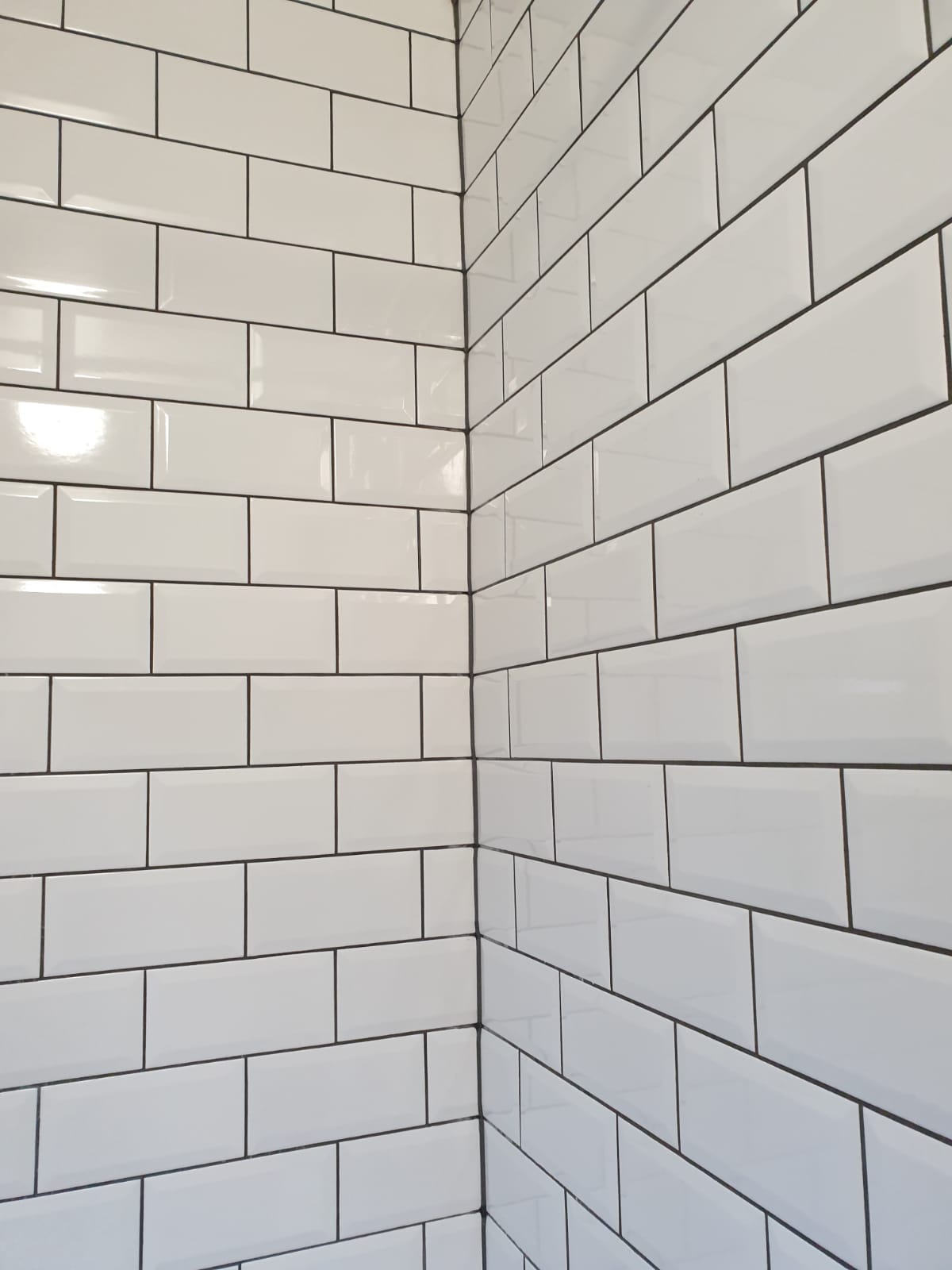
Tiling is part of almost every bathroom and kitchen project we run, so most of our recent work mirrors those install areas — South Woodford, Wanstead, Walthamstow, Buckhurst Hill and Loughton head the list. Standalone tiling-only contracts are accepted across the full East London catchment.
Don't see your postcode? See every area we cover or ask us directly.
Founder & Lead Contractor, RJS Innovative Building Ltd
9+ years on East London building & fit-out projects · Companies House #10012712
Raphael set the tiling spec for the business in 2017: full coverage, decoupling on every problem substrate, BS 5385 compliance throughout. The lead tiler on his team has been with the business for over six years and has personally laid more than 80,000 tiles across East London bathrooms and kitchens.
Real East London projects — photographed on completion. Captions describe the actual work delivered.
Bathroom re-tiled with 1200×600 porcelain marble-effect after previous install failed within 18 months; full strip and decoupling membrane fitted, completed in 6 days.
Kitchen splashback and floor tiled in matching herringbone porcelain, including underfloor heating overlay.
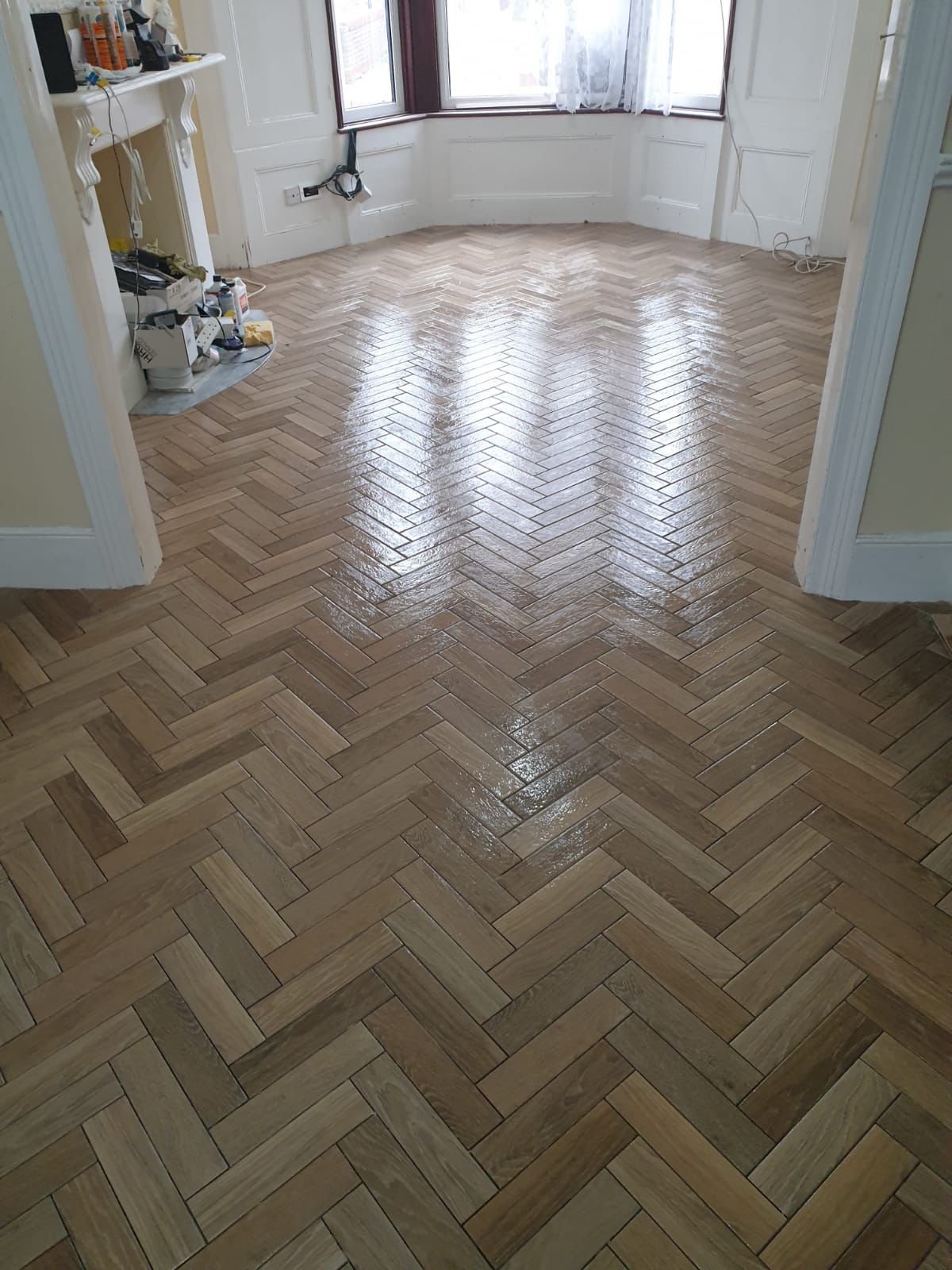
Full wet room floor and walls in 600×600 porcelain with frameless glass screen and digital shower system.
Free site visit, full substrate assessment, written quote against your chosen tiles.
Substrate-first installs · Decoupling membrane standard · BS 5385 compliant
Find us
RJS Innovative Building Ltd
47 Pulteney Road, South Woodford, London E18 1PR
Co. #10012712 · Founded 2016
Page details
Last updated: April 2026
Author: Raphael Sappa