
Do I need planning permission for a loft conversion in London?
In most cases, a London loft conversion does not need full planning permission — it falls under Permitted Development (PD) rights. But if your home sits in a conservation area, has an Article 4 direction in place, is listed, or you exceed the 40 m³ (terrace) or 50 m³ (semi/detached) volume cap, you'll need a full planning application.
The short answer
Most London loft conversions can be built under Permitted Development, which avoids a full planning application. The key conditions: the new volume must not exceed 40 m³ on a terraced house or 50 m³ on a semi or detached, the dormer cannot extend forward of the original roof slope facing the highway, and materials must be similar to the existing house. Conservation areas, Article 4 directions and listed buildings remove these PD rights — those projects require full planning. A Lawful Development Certificate is strongly recommended even when PD applies.
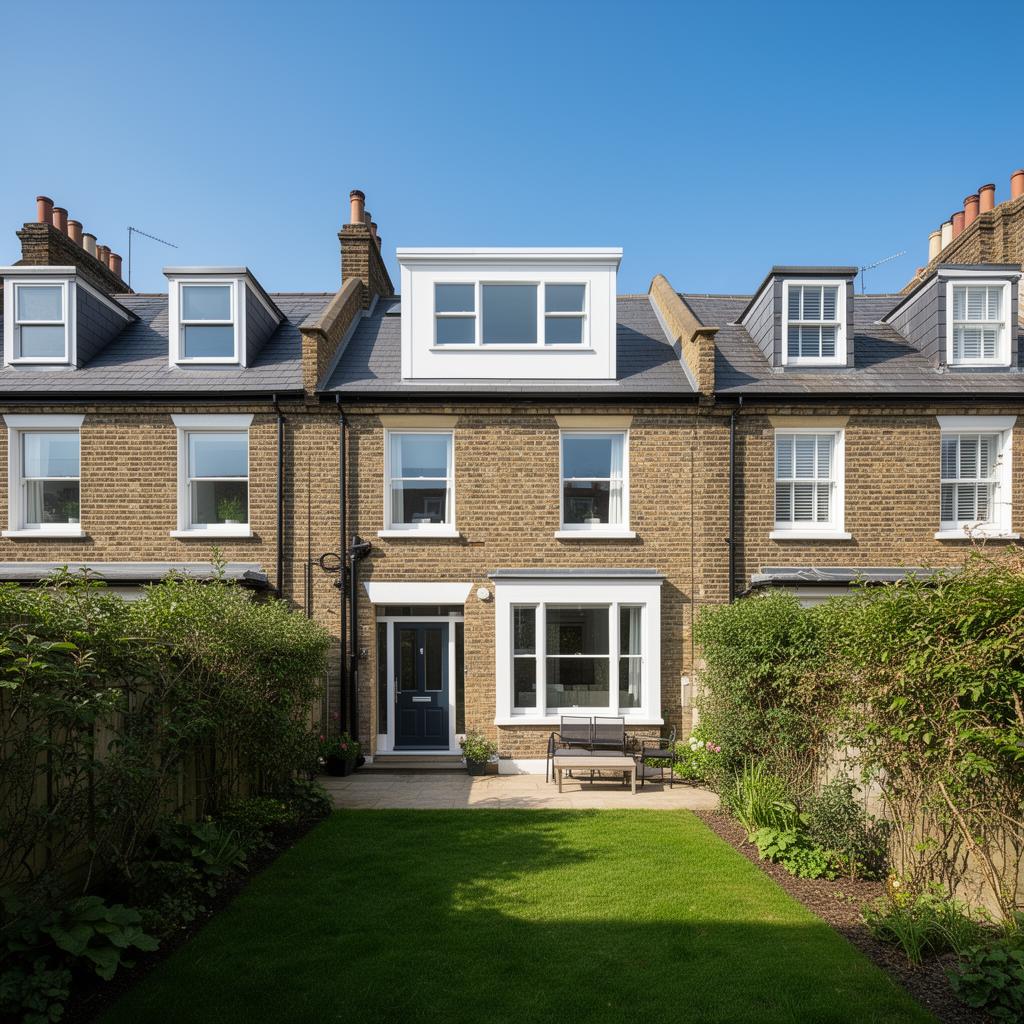
Permitted Development rights for loft conversions, in plain English
Permitted Development (PD) is the legal framework that lets you carry out certain home extensions and conversions without applying for full planning permission. For loft conversions in England, the headline allowances under Class B of the General Permitted Development Order are: up to 40 m³ of additional roof space on a terraced house, or up to 50 m³ on a semi-detached or detached house. That's measured as the volume added by the dormer or roof extension above the original roof line.
Beyond the volume cap, PD imposes specific design rules. Dormers cannot project forward of the principal elevation facing a highway — so a front-facing dormer over the street is almost never PD. Side-facing windows in the new walls must be obscure-glazed and non-opening below 1.7m above the loft floor. Materials must be of similar appearance to the existing house. Roof extensions, dormers and box dormers must not extend beyond the plane of the existing roof slope on the front elevation.
For the full delivery scope, see loft conversions in South Woodford and East London.
When you DO need full planning permission
Four situations remove your PD rights and trigger a full planning application:
Conservation areas
Roughly 10% of London sits in a designated conservation area — common across Walthamstow Village, parts of Wanstead, Hackney, parts of Loughton and most of central London. Conservation area status removes PD for dormers and rear roof extensions visible from the street, and often restricts side dormers too. A full application is needed; the council will assess design, materials and visibility against the conservation area appraisal.
Article 4 directions
Article 4 directions are local planning instruments that selectively withdraw PD rights — often applied alongside or independently of conservation area status. They're common in parts of Waltham Forest, Hackney and Redbridge. Always check your address against your local planning authority's online policy map before assuming PD applies.
Listed buildings
Listed Building Consent is required for any external alteration regardless of scale. PD does not apply. Loft conversions on Grade II listed homes are possible but typically require sympathetic detailing — slate to match, traditional dormer cheeks, careful structural integration with the historic roof structure.
Exceeding the volume cap
Larger conversions — particularly L-shapes that combine a rear dormer with a side outrigger dormer — can quickly exceed the 40 m³ cap on a terrace. If you're over the cap by even a few cubic metres, the entire conversion falls outside PD and needs full planning.
Why a Lawful Development Certificate is worth getting anyway
Even when your project clearly falls under PD, applying for a Lawful Development Certificate (LDC) is recommended. The benefit: when you sell the house, the buyer's solicitor will ask for proof that the loft conversion was lawfully built. Without an LDC, you're relying on your contractor's interpretation of PD rules, which buyers and their lenders sometimes refuse to accept.
If you discover after the fact that the conversion exceeded PD limits, you can apply for retrospective planning — but if it's refused, you can be required to demolish or alter the work. The LDC removes that risk before site work starts.
How it compares
Quick reference for the four most common London loft conversion routes:
| Conversion type | Typical PD route | When full planning is needed |
|---|---|---|
| Rear dormer (terrace) | Usually PD if under 40 m³ | Conservation area, Article 4, listed, or volume cap exceeded |
| Hip-to-gable (semi) | Usually PD if under 50 m³ | Conservation area, side-facing visibility issues, or paired-house policies |
| L-shape (terrace) | Often exceeds PD volume | When combined volume > 40 m³ or visible from street |
| Mansard (terrace) | Almost never PD | Almost always full planning — significant front-elevation change |
If you're unsure which route applies to your address, your local planning portal (Redbridge, Waltham Forest, Hackney, Newham etc.) lists conservation area boundaries and Article 4 directions on its policy map.
Other approvals you'll need on top of planning
Even with planning sorted, three further approvals run in parallel for almost every loft conversion: Building Regulations sign-off (separate from planning, mandatory regardless of PD or full planning route), the Party Wall etc. Act 1996 process if your work affects a shared wall with a neighbour (almost always the case in London terraces), and structural calculations from a chartered structural engineer for the steels and floor design.
Building Control assesses fire escape (a loft above the second storey needs a protected stair to ground level), thermal performance of the new roof and walls, structural adequacy, and ventilation. The certificate they issue at the end is what your conveyancer will look for at sale.
Party wall notices are typically served 2 months before site work; awards usually settle within 4–6 weeks once surveyors are appointed. Skipping this process is a common cause of disputes that delay completion by months.
If you'd rather skip the research and just talk through your project, see our loft conversion service.
About the author
Raphael Sappa
Founder & Lead Contractor, RJS Innovative Building Ltd
9+ years on East London building & fit-out projects
Raphael has overseen 60+ loft conversion projects across South Woodford, Wanstead, Walthamstow, Hackney and Loughton since 2016 — including conservation-area projects in Walthamstow Village and Article 4 zones in Waltham Forest. He coordinates planning applications, party wall awards and Building Control sign-off in-house alongside the build itself, so clients get one accountable contact across the whole approvals process.
Related questions
Need a loft conversion designed and built — including the planning route?
Free site visit, written feasibility on PD vs. full planning, fixed quote against the right approval route from day one.
Which? Trusted Trader · Companies House #10012712